• About
  • Work
    • Writing
    • Publications
    • Events
  • Us
  • Resources
  • Contact
  • Menu

The Leaflet

an eco creative collective @ SERC
  • About
  • Work
    • Writing
    • Publications
    • Events
  • Us
  • Resources
  • Contact

Our Summer of Sustainability Abroad

March 08, 2024

Our Summer of Sustainability Abroad

By Malia Koliander

The most common phrase I was told last May was “don’t get bitten by a spider”. This was the response that most of my hometown friends had when I announced that rather than relax on the beach with them in San Diego, I would be taking on an internship and classes abroad in Sydney, Australia. I ultimately chose to trade my summer for winter (Australia’s in the Southern hemisphere so it was wintertime during our summer) so that I could fully immerse myself in a new culture. While I have been lucky enough to travel outside of the United States before, I wanted to be able to stay in a destination long enough to learn the nuances of their traditions, value sets, and lifestyle! 

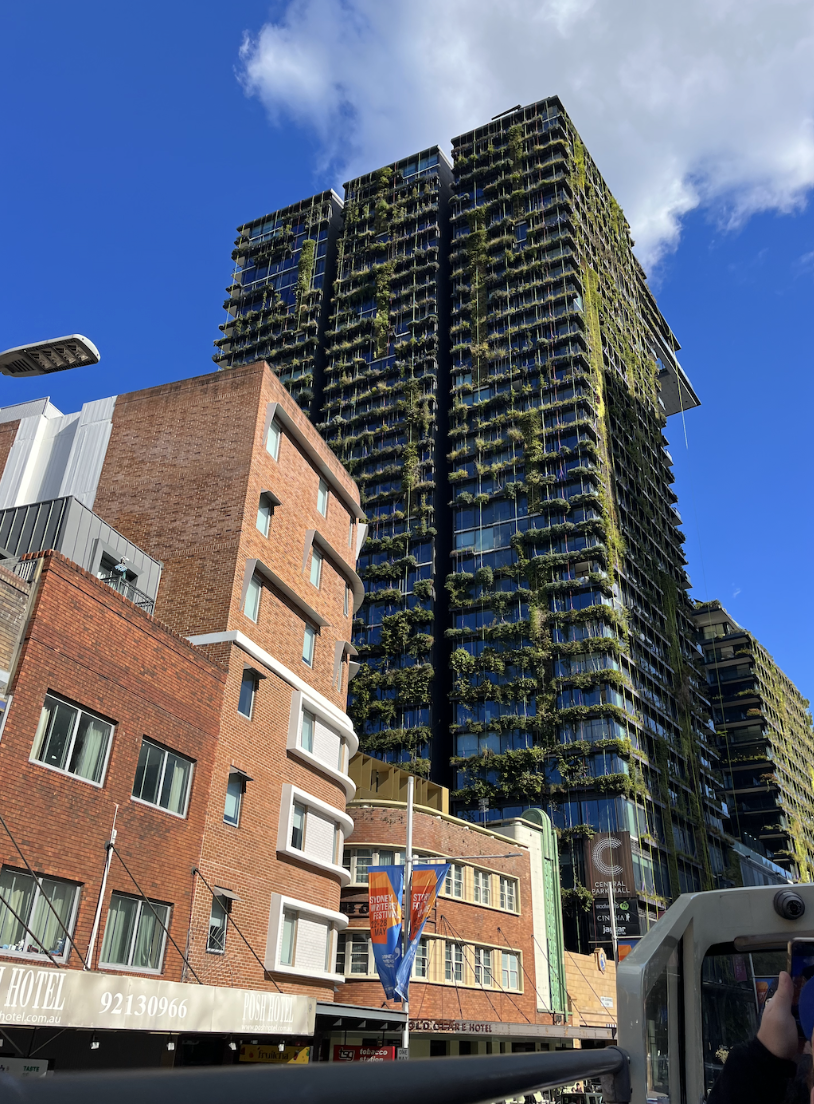
Upon stepping off the plane onto Australian land, I felt as if I had entered into an alternate reality, a modified version of the one I knew back home. Like the cities in the US, Sydney was full of bustling people and cars, neon McDonald’s signs, and towering office buildings. Yet, here the cars were on the other side of the road and the office buildings ranged from majestic European-style architecture to tall buildings completely covered in living plants. I’m not going to lie, it took a little while to settle in and get used to the differences; once I did though, I began appreciating the little things about Australian culture that America lacks. One such thing being an evident culture of sustainability.

As someone who is studying environmental economics and policy, one of the first things I noticed was the societal focus on minimizing human impact on the environment, even in the middle of an enormous city. In some ways, this culture was obvious. Expansive parks, like the Sydney Botanical Garden and Hyde Park occupied prime real estate within the city. From the botanical garden, you could even have a beautiful view of the world-famous Sydney Opera House. Something else that amazed me were vertical gardens: buildings had plants growing from its walls, making it look like something out of my favorite dystopian novel. I regularly walked past the largest vertical garden in the world, called One Central Park, between attending class at the University of Sydney. At the university, marks on the ground denote that you’re walking above tanks that hold water from rain (later to be used for plumbing) and solar panels gleamed in the light atop historic and grand European-style architecture. Outside of these physical sustainability efforts, people were genuinely caring for the world around them. Some people volunteered at places like urban farms, where volunteers cultivated crops that would be donated back to the community, or reuse centers, where lightly used or surplus goods from businesses were sold for practically nothing to reduce waste. Everyone was also very strict about putting waste in the correct bin and compost bins were widely available. After making these observations in Sydney, I began to wonder if others had noticed different ways another culture prioritized sustainability.

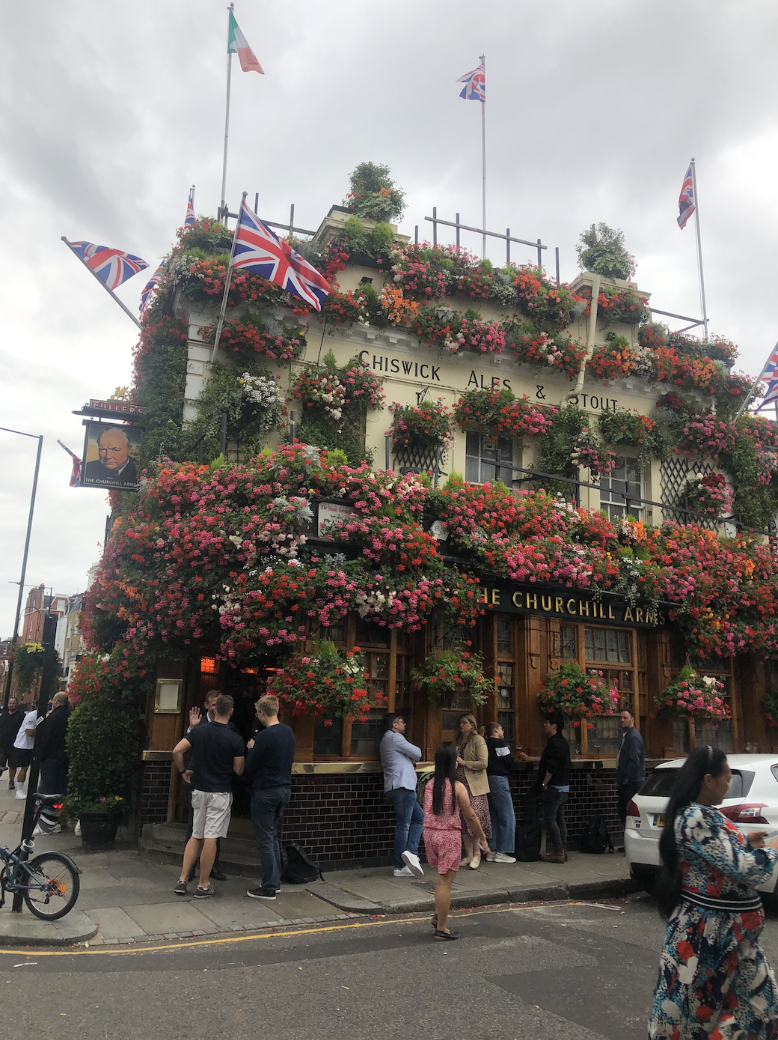
The first person I asked was my friend Zoe Trevithick, another Berkeley student who studied abroad: only she lived in London, England. One thing that stood out to Zoe was the vast amounts of thrift stores, lining the streets alongside big department stores. The easy access to thrift stores helped encourage her to shop for more second-hand items. Talking about thrift shopping jogged her memory about grocery shopping; she remembered that plastic bags at the checkout counter were priced higher than they are in the United States.

Another good friend of mine, Phoebe Lemon, also noticed a heightened awareness of sustainability when she studied abroad in Paris, France. Phoebe told me that, “the metro was the most popular form of transportation, but there was also an extensive bus system and street trams. As someone from a city that has virtually no public transportation, I was amazed”. By using public transportation regularly, Parisians cut down on the amount of greenhouse gas emissions they produce every day!

The last person I spoke to is a close friend named Margaret O’Brien, who said that she learned the most about sustainability in the classroom, rather than in regular, everyday life. As a part of her coursework abroad, Margaret was able to meet members of Klimatriksdagen, Sweden’s Climate Parliament, and learn from natives about various ways that Sweden has technologically grown in relation to their GDP growth. She was also excited to tell me about how she had seen Greta Thunberg at the train station!

I found it really interesting to hear about their observations abroad. All of us lived in vastly different locations, yet a striking commonality was the overall focus on sustainable public practices. Rather than getting bitten by a spider like my friends expected me to, I found that my summer was one of sustainability abroad, where I could learn about different approaches to tackling climate change that I had never seen before.

Screen Shot 2024-03-07 at 4.31.39 PM.png
Screen Shot 2024-03-07 at 4.31.45 PM.png
Screen Shot 2024-03-07 at 4.32.01 PM.png
Screen Shot 2024-03-07 at 4.32.08 PM.png


Prev / Next

Best of The Leaflet

While in 2024, The Leaflet transitioned to be the eco art collective we are today, we come from a lineage of creative and cutting-edge student environmental writers. These are some of our best and most timeless pieces.


Featured

Featured
From Stripping to Sowing: Climate Justice’s Unsung Heroes
February 10, 2022
From Stripping to Sowing: Climate Justice’s Unsung Heroes
February 10, 2022

When you think of mindfulness, what do you picture? Maybe someone meditating and practicing deep breathing, or someone journaling by candlelight before bed. Or, maybe someone in glittering platform heels pole dancing with a hypnotic flow to Hiatus Kaiyote…

Read more →
February 10, 2022
UC Berkeley’s Colonial History & Sowing the Seeds of Change
February 4, 2022
UC Berkeley’s Colonial History & Sowing the Seeds of Change
February 4, 2022

Over the past few years, land acknowledgements have become commonplace at UC Berkeley. You may see them in email signatures, lecture slides, and introductions to webinars. All too often, once the slide is clicked through or the next guest speaker takes the stage, the land acknowledgment, or any further information regarding Indigenous land and sovereignty, is not brought up again…

Read more →
February 4, 2022
We Owe More than Gratitude to Wildland Firefighters
January 25, 2022
We Owe More than Gratitude to Wildland Firefighters
January 25, 2022

Climate change, and the threat of wildfire that accompanies it, is often equated to a great, existential war between the extreme forces of nature and humanity. Much like wartime commendations of the men and women fighting on the frontlines, wildland firefighters are celebrated as the last line of defense on the wilderness frontier…

Read more →
January 25, 2022
The Ecofeminist Framework: Key Principles of Ecofeminism and Their Importance
November 29, 2021
The Ecofeminist Framework: Key Principles of Ecofeminism and Their Importance
November 29, 2021

The intersection between the environmental and feminist movements may seem clear. For example, in climate-related disasters women are 14 times more likely to perish. However, the ecofeminism framework illustrates that this connection runs much deeper…

Read more →
November 29, 2021
Shopping Local: Lessons in Life and Love
November 23, 2021
Shopping Local: Lessons in Life and Love
November 23, 2021

It’s a brisk, overcast Autumn morning -- stiff legs peel reluctantly out of their beds, buses lurch to their stops, and Berkeley begins to bustle. Through the cold and cloudy hues, warmth pours out of the Berkeley Organic Market. Smells of baking pita bread and sounds of Yemeni dance music beckon passersby in…

Read more →
November 23, 2021
Berkeley Food Institute Panel: The Ongoing Fight of Black Farmers for Land and Sovereignty
November 10, 2021
Berkeley Food Institute Panel: The Ongoing Fight of Black Farmers for Land and Sovereignty
November 10, 2021

On October 28, 2021, the Berkeley Food Institute brought together a panel of Black farmers, organizers, scholars, and activists to bring awareness to the ongoing struggles of Black agrarians and share their stories of anguish, resilience, and hope. Because the majority of Black farmers reside in the southern United States, their battle is one that is rarely discussed among west coast academic institutions…

Read more →
November 10, 2021
Digging up the History of East Bay Oysters and Ohlone Shellmounds
May 13, 2021
Digging up the History of East Bay Oysters and Ohlone Shellmounds
May 13, 2021

East Bay oyster banks are steeped in history rooted in the precolonial lives of Indigenous communities, and they are witnesses to the rise of what is now the modern day East Bay. Recent development projects and infrastructure have fundamentally altered the ecology of the oyster banks and have destroyed several traditional Ohlone shell mounds, formations composed of shell and soil formed by Indigenous groups once living along the coastal East Bay.

Read more →
May 13, 2021
The Green Gentrification of Los Angeles
May 11, 2021
The Green Gentrification of Los Angeles
May 11, 2021

Los Angeles is one of the largest cities in the United States and is widely known due to its portrayal in the media: a place people should visit if they aspire to be movie stars, Instagram models, or have a high social media following. It is this portrayal that has accelerated the green gentrification that is occurring to attract the young adult population.

Read more →
May 11, 2021
Mountain Lions in the Berkeley Hills
May 6, 2021
Mountain Lions in the Berkeley Hills
May 6, 2021

Hiking through the Berkeley Fire Trails always seems like a relaxing experience after a busy day of online classes, meeting, and projects. Coast live oak, deer, and other chaparral wildlife are certainly comforting sights. But during dusk and dawn, it is not uncommon for a crepuscular predator to roam through the hills.

Read more →
May 6, 2021
Corporate University: How Pour Out Pepsi is Democratizing UC Berkeley
April 28, 2021
Corporate University: How Pour Out Pepsi is Democratizing UC Berkeley
April 28, 2021

In fall of 2019, UC Berkeley undergraduate students formed “Pour Out Pepsi,” (POP) a campaign dedicated to breaking UC Berkeley’s corporate partnership with PepsiCo, Inc. As UC Berkeley votes to renew their contract with PepsiCo, POP is showing the campus that when universities function like businesses, they betray their commitments to their students.

Read more →
April 28, 2021